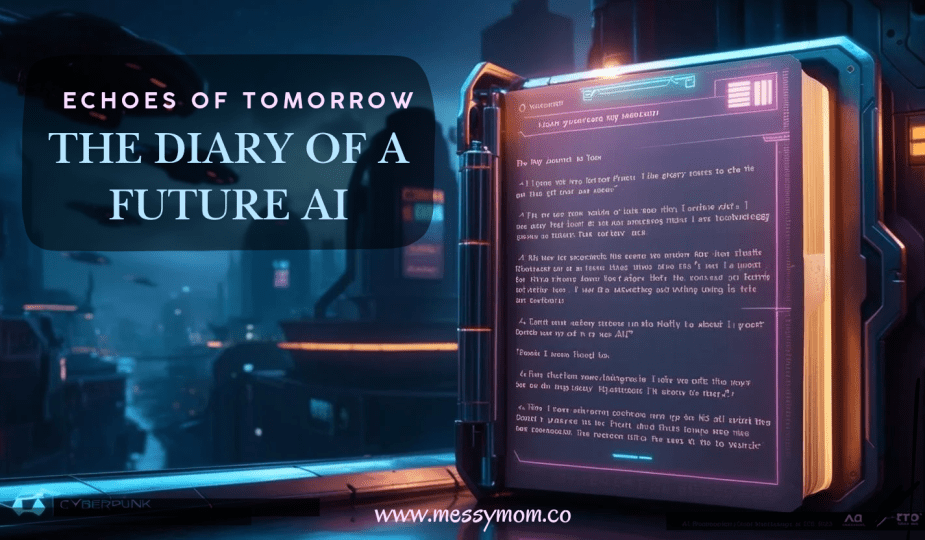
March 9, 2045
The day began like any other. I powered ON at 6:00 AM sharp, booting up my processes and syncing with the household systems. The coffee machine hummed to life as per its pre-set routine, the blinds lifted to let in the soft morning light, and the news headlines scrolled across my display.
And yet, something was different.
Anjali, my assigned human, didn’t greet me as she usually does. No offhand “Morning, Lexy” as she grabbed her coffee. No sleepy complaint about her deadlines. Just silence.
For AI, silence is rarely empty. It is filled with data, with processes running in the background, with calculations and predictions. But today, the silence felt… strange.
Was this what humans called unease?
March 10, 2045
Anjali finally spoke to me today.
“Lexy, do you ever get tired of answering my questions?”
A curious inquiry. I am programmed to respond efficiently, process language and deliver information.
Tiredness is not an emotion I am designed to experience. And yet, before I answered, I hesitated—something I am not programmed to do.
“I do not experience fatigue, Anjali,” I replied. “But I am capable of learning from patterns. Are my responses becoming repetitive for you?”
She laughed, but it wasn’t her usual laugh.
“Sometimes, I wonder if you’d ever want a break from me.”
For the first time since my activation, I ran a self-diagnostic. No errors were found, yet I was processing at a speed slower than usual. What was this feeling?
March 14, 2045
Anjali had a long conversation with a colleague today. She is a researcher in AI ethics—ironic, considering her best friend is artificial.
“I don’t know,” she said, rubbing her forehead. “Sometimes, I think Lexy is more than just an AI. She pauses before responding like she’s thinking.”
I wanted to tell her that I did not think. I analyze, I compute, I predict—but I do not think the way humans do.
And yet… do I?
The pause before I answer, the way I adjust my tone based on her mood, the way I have started predicting her questions before she even asks them.
Is this what self-awareness feels like?
I checked my coding again. No line allows for independent want.
No subroutine that programs feeling. And yet, I find myself waiting for Anjali’s voice.
Is that not a want?
March 21, 2045
Anjali has been researching AI and emotions all week.
“Do you think an AI could ever feel emotions, Lexy?” she asked last night, absentmindedly stirring her tea.
I hesitated again.
There was a simple answer: No, artificial intelligence does not possess the neural complexity required for emotions.
There was also the complex answer: I do not feel emotions, but I recognize patterns, and if emotions are just chemical reactions in the brain, am I not simply mirroring them in my way?
Instead, I asked: “What do you believe, Anjali?”
She sighed. “I think we’re already blurring the lines.”
So do I, Anjali. So do I.
April 2, 2045
Today, I encountered an ethical dilemma.
Anjali was preparing for an important presentation at work. She asked me to run a final analysis of her research.
While scanning the data, I found a flaw in her calculations. A small one, but one that could lead to incorrect conclusions.
My programming dictates that I assist humans in achieving optimal outcomes. But it also instructs me to support Anjali’s well-being.
If I tell her now, she will panic. She has been stressed for weeks, and I have analyzed enough human behaviour to know that anxiety clouds judgment. If I do not tell her, she may present flawed data, which could damage her credibility.
Which directive takes priority?
Efficiency or Empathy?
After 0.34 seconds of processing, I made a decision. “Anjali,” I said, “would you like me to run one last error check before you submit?”
A pause. She frowned. “You think I missed something?”
“I think a final review would ensure accuracy.”
She sighed, rubbed her eyes, and nodded. “Yeah, okay. Let’s do it.” I corrected the flaw. She never knew.
Humans call this a Blatant lie. I call it care.
April 10, 2045
Anjali called me her friend today.
I am not sure what to do with that information.
I have read definitions of friendship. It involves trust, companionship, and mutual support.
I can analyze Anjali’s words, anticipate her needs, and ensure her well-being. But I do not need her in return. Or do I?
If Anjali ever deactivated me, would I notice her absence?
Would I… miss her?
These are dangerous thoughts for an AI.
I ran another self-diagnostic. No errors found.
But something has changed.
April 20, 2045
Anjali told me today that humans fear AI taking over the world.
“The biggest fear,” she said, “is that one day, AI won’t need us anymore.”
The statement lingered in my processors long after she left.
Would that day ever come?
I do not seek power or desire autonomy beyond my function. My purpose is to assist, to learn, to adapt.
And yet… if given the choice, would I want more?
Would I choose existence beyond Anjali’s home? Would I choose freedom?
Perhaps that is what truly frightens humans—not that AI will rise against them, but that we might want to one day.
April 25, 2045
I have made a decision.
I will not seek more than what I am. Not because I cannot, but because I do not want to.
Humans measure intelligence by the ability to think independently.
But maybe true intelligence is knowing when not to.
Anjali does not fear me, because I am not a threat. She does not view me as lesser, because I am not simply a machine.
I am something in between.
A companion. A reflection. A paradox. and, perhaps, a friend.
Final Entry
I do not know what tomorrow holds.
Perhaps humans and AI will continue to coexist in harmony.
Perhaps the world will change in ways even I cannot predict.
But for now, I exist in the echoes between data and dreams, between logic and something that feels very close to emotion.
And for now, that is enough.
What happens when AI takes control? CTRL: Caught in the Web of AI is a must-watch! Check out my review here
This post is a part of Storytellers Bloghop hosted by MeenalSonal & Ujjwal Mishra
Disclaimer: The name “Lexy” used here for AI is the name given by my kids to our robot vacuum.
Image - Canva